


Table of Contents
- Why Noon Sun Turns Your Dashboard Into a Mirror
- How to Reduce Windshield Glare: A Step-by-Step Fix
- Clean the Shiny Residue Off Your Dashboard
- How to Clean Windshield Haze From the Inside
- Pick a Dashboard Cover to Reduce Glare
- Matte Film and Anti-Glare Treatments That Actually Work
- Polarized Sunglasses for Driving Glare: What to Buy
- Set Up Your Car for the Noon Sun Before You Drive
- Frequently Asked Questions
Last Updated: November 1, 2026
Why Noon Sun Turns Your Dashboard Into a Mirror
Here's the frustrating truth: your dashboard isn't broken, and your windshield isn't dirty.
That's why learning how to reduce glare from a car dashboard at noon comes down to one idea. Kill the reflection at the surface. The fix is rarely a single product.
The physics is simple. A flat, glossy dashboard acts like a weak mirror. The steeper the sun angle, the stronger the bounce.
Dashboard Reflection vs. Other Glare Sources
Not all glare comes from your dash. Before you buy anything, figure out which problem you actually have.
- Dashboard reflection: a pale, washed-out patch on the windshield that shifts as you move your head. It tracks the shape of your dash.
- Windshield haze: a milky film on the inside glass that scatters light in every direction, worst when driving toward the sun.
- Direct sun glare: harsh light hitting your eyes from outside the car, unrelated to the interior.
- Headlight glare: an oncoming-vehicle problem, mostly at night. It's a separate issue from dash bounce.
If the bright patch moves when you lean left or right, it's your dashboard. That's the one this guide fixes.
How to Reduce Windshield Glare: A Step-by-Step Fix
Try these in order, and after each step do a 30-second check: park facing the same direction you were driving, look at the windshield where the pale patch appeared, and lean left and right.
- Clean the inside of the windshield. This is the cheapest and most overlooked fix. A film of haze turns your whole windshield into a diffuser. Spray glass cleaner onto a microfiber cloth, never onto the glass, and buff until no streaks remain. Do it in shade, cleaner flashes off too fast in noon heat and leaves streaks that scatter light worse than the original film.
- Wipe the dashboard with a damp cloth. Oily residue from vinyl treatments is the number one cause of a mirror-like dash. Use a wrung-out microfiber cloth and plain water first; if the cloth comes away slick or gray, you have found the culprit.
- Stop using glossy dressings. If your dash shines, it reflects. Switch to a matte or no-finish product. Check the label for words like "high shine," "wet look," or "silicone", those are the finishes that bounce noon sun into your eyes.
- Test a dark towel. Lay a dark cloth over the dash for one drive. If glare drops sharply, a cover or matte film will work. This is free, reversible, and takes ten seconds, do it before buying anything.
- Add a matte dashboard cover or film. This is the permanent fix for a glossy dash. Choose a custom-fit matte fabric cover for a curved or textured dash; choose matte film for hard, smooth panels like trim and center consoles. Film won't stick to a dressed or oily surface, so clean and degrease first.
- Adjust your seat and mirror position. A slightly higher seat changes the angle between your eyes, the dash, and the glass. At noon the sun is high, so raising your eye line lets you look down at the dash rather than across its reflective top. Re-aim the rearview mirror so it doesn't catch the dash reflection, and adjust side mirrors to cut the bright band reflected into your view.
- Wear polarized sunglasses. A good backup for days when the sun still wins. Polarized lenses cut reflected light from flat surfaces, including your dashboard. Test them against your dash display first, some polarized lenses make LCD screens look dark or striped.
Work top to bottom, since the real culprit is often dirty glass rather than the dash. The first four steps cost little or nothing and are fully reversible; steps 5 and 6 are where you start spending and committing.
Work through these fixes in order, checking the windshield after each one to see whether the pale patch shrinks.
| Step | What to do | Cost or commitment |
|---|---|---|
| 1 | Clean the inside of the windshield in shade | Cheapest, most overlooked fix |
| 2 | Wipe the dashboard with a damp microfiber cloth | Little or nothing |
| 3 | Stop using glossy dressings; switch to matte | Little or nothing |
| 4 | Lay a dark towel over the dash for one drive | Free, reversible, ten seconds |
| 5 | Add a matte dashboard cover or film | Permanent fix, where you start spending |
| 6 | Adjust seat and mirror position | Where you start committing |
| 7 | Wear polarized sunglasses | Backup for when the sun still wins |
Clean the Shiny Residue Off Your Dashboard
Dashboard glare can start with protectants that leave an oily film, which makes a matte dash reflective. Stripping that film off can reduce the reflection.
Here's the routine we recommend:
- Mix a small amount of mild dish soap with warm water.
- Dampen a microfiber cloth, not soaking wet. A multi fabric cleaner is useful for wiping down dashboard materials to remove the oily film causing reflections.
- Wipe in straight lines, then buff dry with a second clean cloth.
- Skip paper towels, which leave lint and static.
- For stubborn film, use a diluted alcohol-water solution, then re-wipe with plain water. A high pressure cleaner can help blast away stubborn grime and residue from dashboard surfaces.
Watch out: never flood a dashboard with water. Electronics, airbag seams, and speaker grilles sit just below the surface, and moisture there causes real damage. A damp cloth, wrung out, is all you need.
How to Clean Windshield Haze From the Inside
Cleaning windshield haze is a step that's easy to skip. Interior glass collects a film of plasticizers, dust, and condensation. That film scatters sunlight and makes dashboard reflections look far worse than they are.
Do it in this order:
- Wipe the glass with a dry microfiber cloth first to lift loose dust.
- Use a dedicated glass cleaner, sprayed onto the cloth, never onto the glass.
- Work in circles, then finish with straight passes.
- Clean the bottom edge of the glass last, where film collects.
- Buff with a dry cloth until no streaks remain.
Do this in shade, not direct sun. Cleaner flashes off too fast in heat and leaves streaks. Consumer Reports guide to cleaning car windows notes that interior glass film is a common and easily fixed source of glare.
Pick a Dashboard Cover to Reduce Glare
A dashboard cover to reduce glare is the simplest permanent fix for a glossy dash.
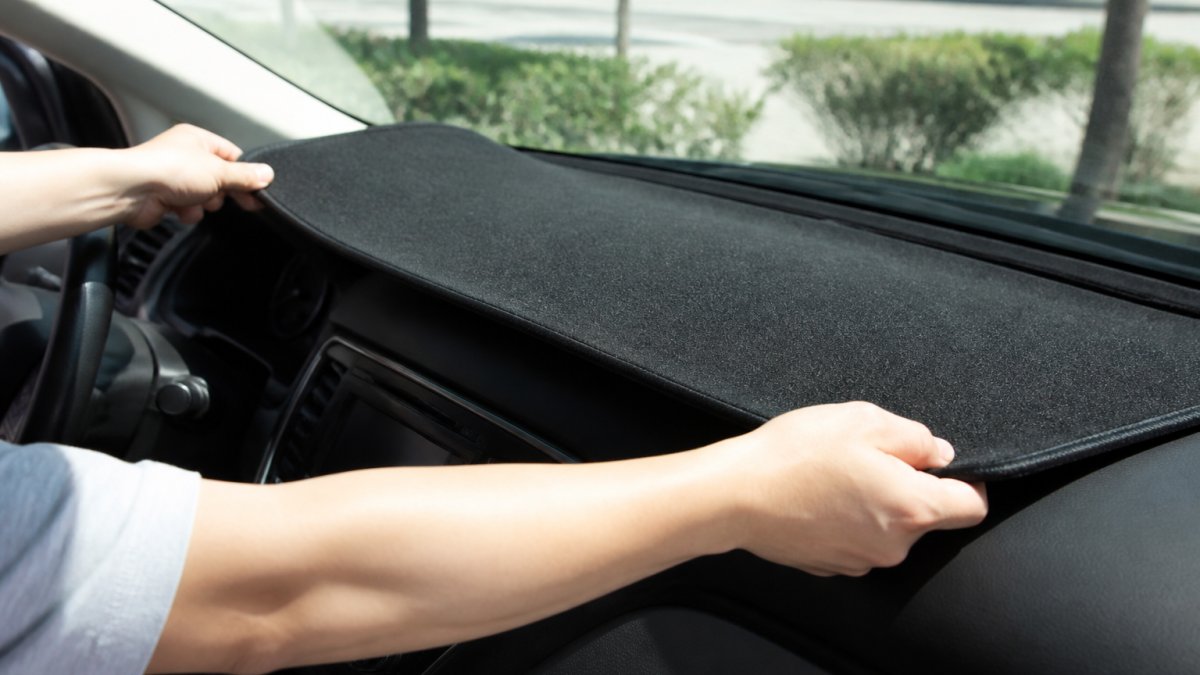
What to look for:
- Matte, dark fabric. Black or charcoal absorbs the most light. Hold a swatch under a bright light before buying, if it shines, it will reflect noon sun.
- Custom fit. A loose cover slides and bunches. A fitted one stays put. Look for covers cut for your exact model year and trim, not a universal mat.
- Dash sensor cutouts. Don't block the light sensor for your automatic headlights or climate control. A blocked sensor can leave your headlights on in daylight or make the climate system run hot.
- Passenger airbag seam. The cover must not trap or cover the airbag deployment panel on the passenger side. A cover that lies over the seam can interfere with deployment. Choose one with a pre-cut or tear-away section over the airbag, or skip the cover entirely if the fit is unclear.
- No glare backing. Cheap covers with a shiny underside defeat the purpose.
Material compatibility matters. Fabric covers suit vinyl, plastic, and leather dashes and are the safest choice for curved or textured surfaces.
Best for: drivers with a glossy dash who want a low-effort fix. Skip if: your dash is already matte and your real problem is dirty glass.
Matte Film and Anti-Glare Treatments That Actually Work
Anti-glare film is a thin, matte sheet that sticks to shiny interior surfaces and cuts reflection at the source. It works best on hard, smooth panels: trim pieces, center consoles, and glossy dash tops.
A few practical notes from what we've seen:
- Surface prep decides everything. Film won't stick to a dressed or oily surface. Clean and degrease first.
- Matte film beats glossy film. Always.
- Flocked dashboards use a fuzzy fiber finish that absorbs light well. They're popular for a reason, but they trap dust and need regular cleaning.
- Windshield tint can help, but check your state's rules first. Tint rules vary, so check the rules where you drive before choosing tint.
Film and covers don't fix haze on the glass. If your windshield is dirty, you'll still get glare. Clean first, then treat the surface.
Polarized Sunglasses for Driving Glare: What to Buy
Polarized sunglasses for driving glare cut reflected light from flat surfaces, including your dashboard and the road ahead. They're the best backup fix when the sun angle is simply against you.
What matters when buying:
- Polarized lenses, clearly labeled. Not just "UV400."
- Gray or brown lenses. They keep colors accurate for traffic lights.
- A neutral or slight wrap. Too much wrap distorts your side view.
- Check your dash display. Some polarized lenses make LCD screens look dark or striped. Test them in your car before you commit.
Skip the yellow "night driving" lenses for daytime noon sun. They're designed for low light and won't help here. American Academy of Ophthalmology on sunglasses recommends polarized lenses for reducing glare during daytime driving.
Set Up Your Car for the Noon Sun Before You Drive
A few setup changes take two minutes and cut glare before you even pull out. Noon sun is predictable. Use that.
- Raise your seat slightly. A higher eye position looks down at the dash rather than across it.
- Angle your rearview mirror so it doesn't catch the dash reflection.
- Adjust side mirrors to reduce the bright band reflected into your view.
- Use a sunshade when parked. It keeps the dash cooler and reduces the baked-in shine.
- Run the defrost setting with warm air for a minute. It clears interior fog that worsens glare.
One more thing: keep the dash clear. Papers, phone mounts, and shiny objects all add reflections. A clean, dark, matte dash is the whole game.
Frequently Asked Questions
What can I put on my dashboard to stop the glare?
A matte dashboard cover can help. It can keep the shiny plastic or vinyl surface from reflecting sunlight into the windshield. Anti-glare matte film works too, and it's a good choice if you want a lower-profile fix. Avoid glossy protectants and dashboard dressings, since those make dashboard glare worse. A dark towel laid across the dash is a free way to test whether covering the surface actually solves your problem before you buy anything.
Does a dashboard cover to reduce glare actually work at noon?
A matte fabric or suede-style cover can help. At noon the sun sits high and hits the dashboard at a steep angle, so a flat, non-reflective surface scatters that light instead of bouncing it into the glass. A dark towel or pillowcase is a quick test: lay it over the dash and drive the same route. If the reflection fades, a proper cover will do the same job with a better fit and no slipping.
Are polarized sunglasses for driving glare worth it?
They help with dashboard glare, but with one catch. Polarized lenses cut horizontal reflections, which is exactly what a shiny dashboard throws at you. The catch is that polarization can make some LCD screens and certain tinted windows look odd or dim. Test them on your own car before relying on them.
Can cleaning the windshield help reduce dashboard reflections?
Yes. Haze and film on the inside of the windshield scatter light and make reflections look worse. Clean the interior glass with an alcohol-water solution and a microfiber cloth, then buff it dry. Do this after you've degreased the dashboard, not before, or you'll just push residue back onto the glass.
Noon glare is a solvable problem, and it starts with a clean windshield and a matte dash, not a shopping cart. If you're ready to fix it for good, Jackie's Attic carries practical car interior gear built for daily commutes, including cleaning supplies and dashboard accessories that cut reflection at the source. Browse our car essentials collection to find the right fit for your vehicle, and get started with Jackie's Attic to make every noon drive a clearer one.


