


Quick Summary
Blot fresh coffee stains right away with a dry, absorbent towel, then work a few drops of mild dish soap in lukewarm water into the stain with a soft brush. Blot again with a clean damp cloth and let the seat dry fully. Old, dried coffee stains need the area dampened and loosened before blotting.
- Identify your seat material first, since cloth, leather, vinyl and suede each need a different cleaner.
- Test any cleaner on a hidden area and wait a few minutes before blotting.
- Blot, do not scrub, so the liquid is not pushed deeper into the foam.
- Rinse out soap residue to avoid leaving a ring on the fabric.
- Dry the seat completely with windows open before closing the car.
Table of Contents
- Why Fresh Coffee Stains Are Easier to Lift Than Old Ones
- Identify Your Upholstery Before You Clean
- How to Remove Coffee Stains From Car Upholstery Without a Carpet Cleaner
- How to Get Old Coffee Stains Out of Car Seats
- Spilled Coffee on Perforated Leather Seats
- Getting Rid of the Spilled Coffee Smell in Your Car Seat
- Coffee Spills With Milk, Cream or Sugar and When to Call a Professional
- Your Next Step: Restore the Seat and Keep It Clean
- Frequently Asked Questions
Why Fresh Coffee Stains Are Easier to Lift Than Old Ones
Fresh coffee stains lift far more easily than dried ones. The liquid has not yet soaked deep into the fibers, and the sugar and oils have not baked into the fabric. Acting within minutes gives you the best chance of removing the stain.
Coffee contains tannins and pigments that bond to fabric over time (ncbi.nlm.nih.gov). Once it dries, the stain can set, and every hour makes removal harder.
- Blot right away, before the stain spreads
- Work from the outside edge toward the center
- Never let the coffee dry on the seat while you wait
Identify Your Upholstery Before You Clean
Your seat material decides which cleaning method is safe. Cloth, leather, vinyl and suede each react differently to water, agitation and cleaners, so check before you touch the stain. The table below is the short version; the notes after it explain the trade-offs.
| Material | Water tolerance | Best first approach | Avoid |
|---|---|---|---|
| Cloth / fabric | High | Mild dish soap solution, soft brush, blot, wet-vac | Soaking the foam, scrubbing |
| Leather (smooth) | Low to moderate | pH-balanced leather cleaner on a soft cloth | All-purpose cleaner, bleach, saturating the seam |
| Perforated leather | Low | Small amount of leather cleaner worked around the holes | Pushing liquid into the perforations |
| Vinyl | Moderate | Mild soap and water, soft cloth | Solvent-heavy cleaners, abrasive pads |
| Suede / Alcantara | Very low | Suede-safe foam cleaner and a suede brush | Water soaking, dish soap, rubbing |
Cloth. The most common seat type and the most forgiving. It handles water and mild cleaners well, which is why the soap-and-water method later in this article works here. The limit is the foam underneath: cloth passes liquid through, so the goal is to clean the surface without driving coffee deeper.
Leather. Needs a gentle, pH-balanced leather cleaner. Harsh products and household all-purpose sprays can strip the finish and dry the hide, and repeated use can lead to cracking along the seams and bolsters. Apply cleaner to the cloth, not the seat, so you control the amount.
Vinyl. Tolerates most mild cleaners, but strong solvents can cause cracking and dull the surface over time. Treat vinyl like leather with a milder product and skip abrasive pads.
Suede and Alcantara. Very sensitive to water. Water can leave a stiff ring that is harder to fix than the coffee stain itself.
Look for a tag under the seat or check your owner's manual. If you still can't tell, assume the seat is delicate and start with the gentlest method on a hidden area.
Watch out: a cleaner that is safe on cloth can stain or dry out leather and vinyl, so never carry a tested cloth-seat dilution over to a leather or suede seat without testing again.
How to Remove Coffee Stains From Car Upholstery Without a Carpet Cleaner
You do not need a machine to get most coffee stains out. A cloth, a mild cleaner and a little patience will handle most spills on cloth seats. Work in small steps and keep the fabric as dry as possible.
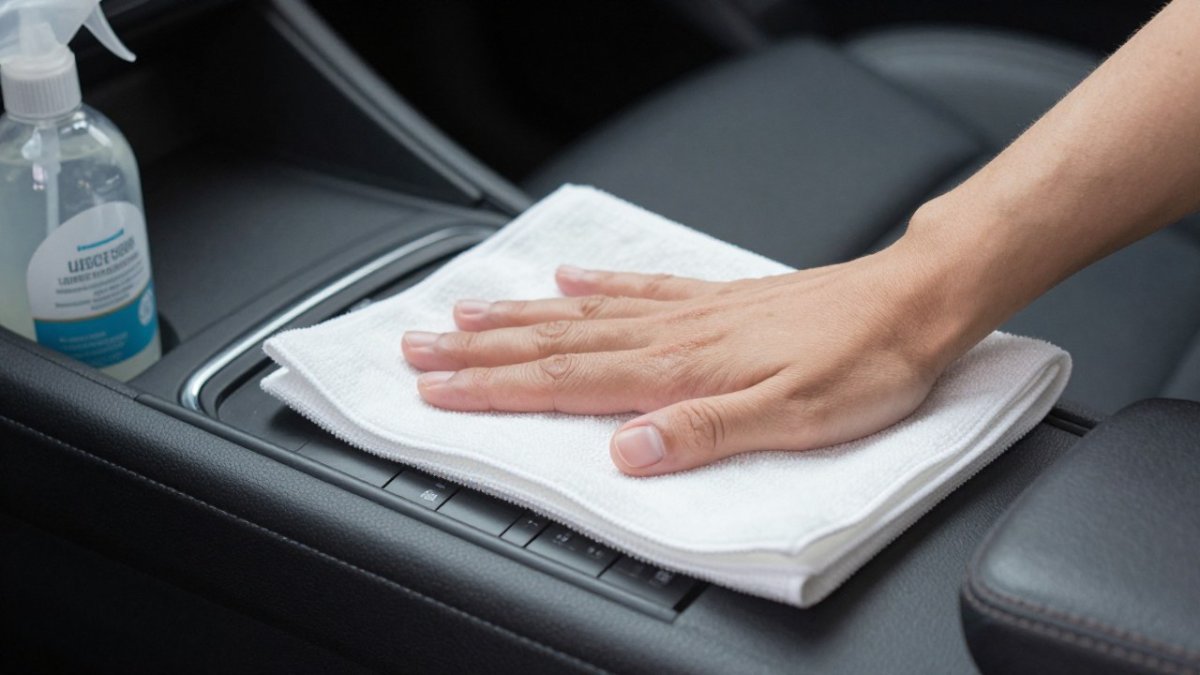
Blot the Spill and Remove Excess Liquid
Start by soaking up as much coffee as you can. Press a dry, absorbent towel onto the stain and hold it for a few seconds. Lift, then press again with a clean section of the towel.
Blotting pulls the liquid up. Scrubbing pushes it deeper into the foam beneath the fabric, so avoid rubbing.
- Use a thick, light-colored towel so you can see the stain transferring
- Replace the towel as soon as it stops picking up color
- Keep going until the towel comes away almost clean
Test a Cleaner in an Inconspicuous Spot
Before you apply any product to the stain, test it on a hidden area, such as under the seat or along the lower edge. Apply a small amount, wait a few minutes, then blot with a white cloth.
If the color transfers or the fabric changes texture, stop and choose a gentler option. A quick test can save the whole seat.
Once the test area looks fine, mix a simple solution. Combine a small amount of mild dish soap with lukewarm water, then apply it lightly to the stain with a soft brush. Blot again with a clean, damp cloth, then dry the area fully.
Rinse out any soap residue, because leftover soap can attract dirt and leave a ring.
How to Get Old Coffee Stains Out of Car Seats
Old, dried stains take more time and a few extra steps. Dried coffee has bonded to the fibers, so you need to loosen it before you lift it.
- Dampen the stain with lukewarm water, but do not soak the seat
- Let it sit for a few minutes so the coffee softens
- Gently agitate with a soft brush in small circles
- Blot with a clean towel until the color stops transferring
- Allow the seat to air dry completely with the windows open
Repeat the process if needed. Two or three gentle rounds usually work better than one hard scrub.
Spilled Coffee on Perforated Leather Seats
Perforated leather needs extra care because the holes can trap liquid underneath. Coffee that soaks through can reach the foam and cause odors if it isn't dried properly.
Wipe the surface with a soft cloth and a small amount of pH-balanced leather cleaner. Work gently and avoid pushing liquid into the perforations. Then dry the seat thoroughly with a clean, dry towel.
Condition the leather afterward to keep it supple. Skip any product that leaves a sticky film in the holes.
Getting Rid of the Spilled Coffee Smell in Your Car Seat
Even after the stain is gone, a sour or milky smell can linger. Moisture left in the foam is usually the cause.
- Open the doors or windows to air out the car
- Place an open box of baking soda on the seat overnight
- Vacuum the baking soda out the next day
- Make sure the seat is fully dry before closing the car up
If the smell stays, the coffee may have reached deeper foam, and a professional cleaning may be the next step.
Coffee Spills With Milk, Cream or Sugar and When to Call a Professional
Coffee with milk, cream or sugar is a different problem from black coffee. The pigment is only part of it: dairy leaves protein and fat in the fibers, and sugar leaves a sticky residue that attracts dirt and holds moisture. That combination is what produces the sour, milky smell that shows up a day or two after the stain looks gone.
Treat these spills faster than black coffee, not slower. The steps are the same as above, with three changes:
- Blot longer. Dairy is thicker than black coffee and takes more passes with a dry towel before the towel stops picking up color.
- Use a cool, mild solution. Mix a few drops of mild dish soap in cool water. Cool water slows the setting of protein soils; hot water can cook dairy residue into the fabric.
- Rinse twice. Soap left behind plus sugar residue is a dirt magnet. Blot with a clean damp cloth, then repeat with a second clean cloth, and dry thoroughly.
For sugar-heavy drinks, such as flavored lattes and sweetened iced coffee, expect a second round. The sugar can leave a faint stiff patch that feels clean but still holds odor. A second light pass with the soap solution and a full dry usually clears it.
Drying matters more with dairy than with black coffee. Leave the windows open or run the air conditioning on fresh air for several hours, and do not close the car up while the seat is still damp. A damp seat pad is where the sour smell develops.
When to call a professional. Escalate to a detailer if any of these are true:
- The stain has not lifted after three gentle rounds.
- The spill was large enough to soak through the fabric, or the seat feels damp well below the surface hours later.
- The smell returns after the seat has fully dried.
- The upholstery is suede, Alcantara or a delicate leather, where a wrong product does more damage than the stain.
- The coffee contained milk or cream and sat overnight or longer.
Watch out: covering a damp, dairy-soaked seat with a towel or seat cover traps moisture and is a common reason a cleaned seat still smells a week later.
Your Next Step: Restore the Seat and Keep It Clean
For a fabric cleaner that works on car upholstery, check out Resolve Multi-Fabric Cleaner - 22 oz, and when you're ready to keep your car comfortable, see our car interior tips.

Button: Shop Upholstery Cleaners Card title: Keep your car seats spotless Card text: Jackie's Attic offers practical cleaning supplies for everyday car messes.
Frequently Asked Questions
How do you get old coffee stains out of fabric car seats?
Old coffee stains need more dwell time and a gentler, repeated approach. Dampen the spot with a small amount of lukewarm water, apply a fabric upholstery cleaner, and let it sit for several minutes so it can loosen the residue. Gently agitate with a soft brush, then blot with a clean microfiber cloth. Repeat rather than soaking the seat, and let the area dry fully with the windows cracked to prevent mildew or lingering odor. A baking soda paste left on for 20 to 30 minutes is another option for stubborn spots, and it is worth patch testing first.
Can dried coffee stains be removed from car upholstery?
In most cases, yes, though results depend on how long the stain has set and the upholstery material. Dried coffee residue usually needs to be re-wetted with lukewarm water and an upholstery cleaner before you agitate and blot it. Work from the outside edge toward the center to avoid spreading the stain. If the stain persists after several gentle attempts, or the fabric starts to fray or change color, stop and consider a professional cleaner rather than pushing harder.
How do you remove coffee stains from perforated leather seats?
Perforated leather needs a pH-balanced leather cleaner applied with a soft cloth, never a harsh all-purpose spray that can soak into the holes. Wipe gently, keep moisture away from the perforations as much as possible, and blot dry with a clean towel. Always patch test in an inconspicuous area first, and follow up with a leather conditioner once the seat is dry so the surface does not crack or stiffen.
How do you get the smell of spilled coffee out of a car seat?
Clean the stain thoroughly first, since leftover coffee residue is usually what keeps the odor alive. Once the spot is dry, sprinkle baking soda over the area, let it sit for several hours or overnight, then vacuum it up. Make sure the seat dries completely after cleaning, because trapped moisture in the foam can cause mildew smells. Good airflow and a few hours in the sun with the windows slightly open usually finish the job.


