


Table of Contents
- 12V Car Cup Warmer: Power, Performance, and Vehicle Compatibility
- USB Mug Warmer: Portability and Power Limits
- Power Source and Vehicle Outlet Compatibility
- Car Cup Warmer Power Consumption and Battery Drain
- Heating Time, Temperature Control, and Performance
- Heated Travel Mug vs Mug Warmer: Which Keeps Drinks Warmer
- How to Choose: Safety, Compatibility, and Real-World Use
- Frequently Asked Questions
Last Updated: October 20, 2026
12V Car Cup Warmer: Power, Performance, and Vehicle Compatibility
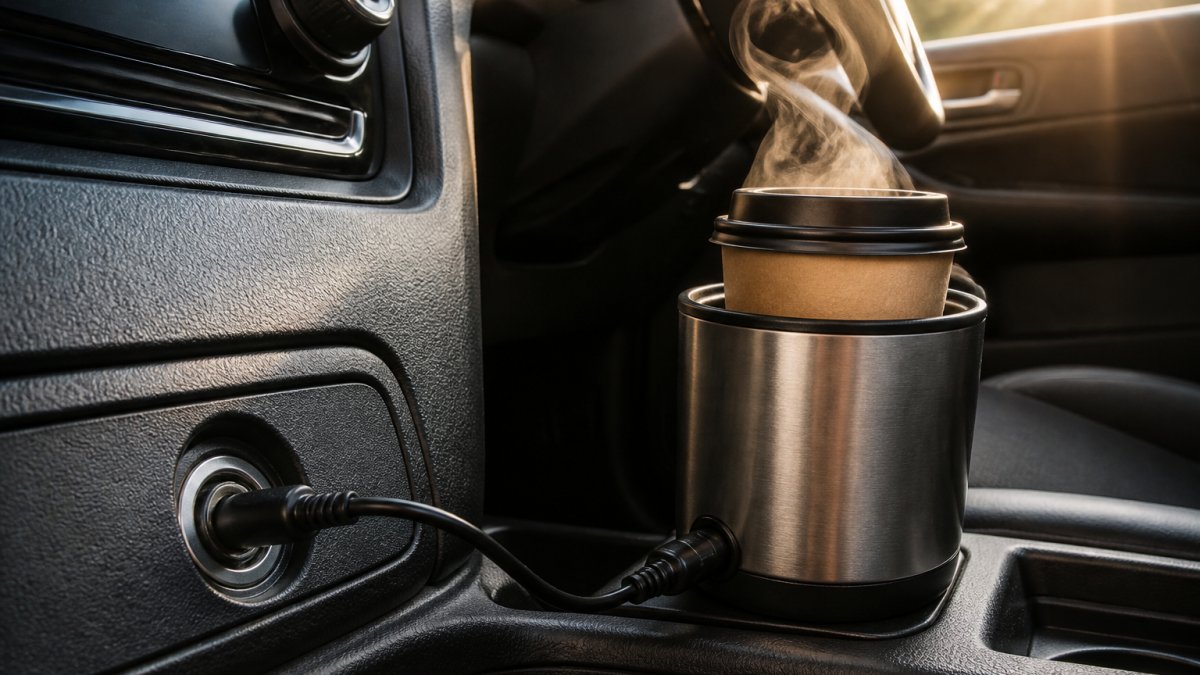
A 12V car cup warmer draws power directly from your vehicle's cigarette lighter socket, delivering consistent heating performance for the entire commute. This direct connection to your car's electrical system means you get reliable warmth without worrying about battery depletion or power fluctuations. At Jackie's Attic, we've analyzed the core differences in a 12V vs USB car cup warmer comparison, and the distinction comes down to power delivery, heating speed, and real-world practicality.

The 12V system taps into your vehicle's alternator, which continuously generates power while the engine runs. This gives you access to genuine electrical capacity, typically 10-15 watts of heating power, without drawing from your car's battery when the engine is off. Most 12V warmers plug directly into the lighter socket and heat a standard coffee cup or travel mug to drinking temperature in 5-10 minutes.
The trade-off is flexibility. You're tethered to the lighter socket location, which is usually positioned in the center console or dashboard. If your cup holder is elsewhere, you'll need to manage the cord or find an alternative power source. For drivers who spend long hours in the car, though, this setup is hard to beat.
USB Mug Warmer: Portability and Power Limits
A USB mug warmer offers flexibility that 12V can't match. You can power it from any USB port, your car's USB charger, a portable power bank, even a laptop. This portability makes USB warmers ideal if you switch between vehicles, use rideshares, or work from multiple locations. However, USB power comes with a significant limitation: wattage.
Most USB mug warmers operate at 5 watts or less, roughly one-third the power of a 12V warmer. This means slower heating times, typically 15-20 minutes to reach drinking temperature, and less aggressive temperature maintenance. USB power is also inconsistent. A standard USB 2.0 port delivers 2.5 watts. USB 3.0 provides 4.5 watts. Only newer USB-C ports with Power Delivery can reliably deliver 10+ watts, and not all vehicles or power banks support that standard.
The real advantage of USB is convenience. You can use the warmer anywhere you have a USB outlet: at your desk, in an Uber, at a coffee shop, even on an airplane. For someone who values flexibility over raw heating performance, USB makes sense. Just don't expect the same speed or consistency as a direct 12V connection.
Power Source and Vehicle Outlet Compatibility
Understanding where your warmer gets its power is crucial for making the right choice. Your vehicle's electrical system offers several options, each with different implications.
12V Cigarette Lighter Socket (DC Adapter): This is the standard connection for most 12V car cup warmers. Your vehicle's alternator supplies 12-14 volts of direct current. The lighter socket is designed to handle moderate current draw, typically up to 10 amps, making it safe for most automotive accessories.
USB-C and USB-A Ports: Newer vehicles often include USB ports integrated into the dashboard or center console. These ports deliver power at lower voltage and current compared to the lighter socket.
Auto Utility Jack (12V Accessory Socket): Some vehicles have an additional 12V outlet separate from the cigarette lighter. This is essentially identical to the lighter socket in terms of voltage and current capacity. It's often found in the rear of the vehicle or in the trunk area.
For maximum compatibility, 12V warmers are the safer bet. Nearly every vehicle manufactured in the last 20 years has a functional cigarette lighter socket. USB compatibility depends on your car's age and trim level, luxury vehicles are more likely to include multiple USB ports, while older or base-model vehicles may have none.
Car Cup Warmer Power Consumption and Battery Drain
How much electrical load does a warmer actually place on your vehicle? This matters, especially if you're concerned about battery drain or electrical system strain.
A typical 12V car cup warmer draws 1-1.5 amps of current at full power. At 12 volts, that's roughly 12-18 watts of power consumption. To put this in perspective, your car's headlights draw 55-100 watts each. A 12V warmer uses less than one-quarter the power of a single headlight.
When your engine is running, the alternator generates far more power than any single accessory needs. A typical automotive alternator produces 60-120 amps, so a 1.5-amp draw from a warmer is negligible. The alternator simply adjusts its output slightly and the warmer operates without strain.
The real concern is leaving the warmer plugged in after you turn off the engine. A 12V warmer will slowly drain your battery. However, the drain rate is slow enough that you'd need to leave it running for several hours, typically 8-12 hours depending on your battery capacity, before you risk a dead battery. Most people unplug their warmer when they exit the vehicle, so this is rarely a practical problem.
USB warmers draw even less power, typically 3-5 watts. If powered from a car's USB port, they have an even smaller impact on the vehicle's electrical system. The trade-off, as mentioned, is slower heating performance.
Heating Time, Temperature Control, and Performance
This is where the 12V versus USB distinction becomes most obvious. Real-world heating performance differs dramatically.
A 12V car cup warmer typically reaches drinking temperature (around 140-160°F) in 5-10 minutes, depending on the starting temperature of your beverage and the ambient temperature in your car. Once heated, it maintains temperature effectively. Many models include a thermostat or temperature control dial that lets you adjust the heating intensity.
A USB mug warmer, by contrast, typically takes 15-20 minutes to reach the same temperature. Because USB power is limited to 5 watts or less, the heating element warms more slowly. Temperature maintenance is also weaker, a USB warmer may only keep your drink warm rather than actively heating it to higher temperatures.
For someone with a 30-minute commute who wants hot coffee the entire drive, 12V is the clear winner. For someone who sips slowly or takes short trips, USB might be adequate.
2-in-1 Smart Car Cup Warmer/Cooler →
The capacity of the warming chamber also matters. Most warmers accommodate standard travel mugs (8-12 oz) and regular coffee cups. The Smart Digital Thermal Bottle from Jackie's Attic has a 450ml capacity and works with various cup shapes, making it versatile for different drink containers.

Temperature control is a feature worth considering. Basic models have no control, they heat to a fixed temperature. Mid-range models include a dial or switch to adjust intensity. Premium models feature digital displays and preset temperature settings.
Heated Travel Mug vs Mug Warmer: Which Keeps Drinks Warmer
This is the question that trips up many shoppers: should you buy an active heated mug or rely on a separate warmer? The answer depends on your priorities and use case.
Heated travel mugs (like the Smart Digital Thermal Bottle Portable Coffee Mug from Jackie's Attic) combine insulation with built-in heating. They use battery power to maintain temperature and can keep drinks hot for 6-12 hours without external power. The advantage is independence, you're not tethered to a vehicle outlet or power source.
The disadvantage is battery management. A heated mug requires charging, just like a phone. If the battery dies, you lose the heating function. You're also limited by the mug's capacity (typically 300-450ml) and weight. Heated mugs are heavier than regular mugs due to the heating element and battery.
Mug warmers (12V or USB) are external devices that heat any cup you place on them. The advantage is flexibility, use any cup you prefer, and the warmer works as long as you have power. The disadvantage is that you must stay near the warmer. Once you remove your cup and walk away, the drink starts cooling.
For a daily commuter who spends most of their time in the car, a 12V car cup warmer is the practical choice. You get consistent heating without battery management, and the cost is lower than a heated mug.
The two aren't mutually exclusive, either. Many people use both: a 12V warmer in the car for the commute, and a heated mug for portability once they reach their destination.
How to Choose: Safety, Compatibility, and Real-World Use
Selecting between 12V and USB comes down to three core factors: how you use your vehicle, what your car actually has, and what trade-offs you're willing to accept.
Assess your vehicle compatibility first. Every car has a cigarette lighter socket, so 12V is always an option. Not every car has USB ports. If you drive an older vehicle or a base-model sedan, USB might not be available.
Consider your commute and lifestyle. If you spend 30+ minutes in your car daily and want your drink hot the entire time, 12V is superior. If you take short trips or switch between vehicles frequently, USB offers flexibility.
Evaluate temperature control needs. If you're particular about drink temperature, look for a warmer with adjustable settings or a digital display. Basic fixed-temperature models work fine for most people, but they lack precision.
Check power reliability. For 12V, ensure your lighter socket works (test it with the included lighter if your car has one).
Think about safety. A 12V warmer left running after the engine is off poses minimal battery drain risk for a few hours, but it's good practice to unplug it when you exit the vehicle.
The practical recommendation for a 12V vs USB car cup warmer decision: start with 12V if your vehicle has a functional lighter socket. It delivers the best heating performance and works in any car.
Keeping your coffee hot during your commute shouldn't require guesswork. The choice between 12V and USB comes down to power availability, heating speed, and how you actually use your vehicle.
Frequently Asked Questions
Can a 12V car cup warmer drain your car battery?
A 12V car cup warmer draws 5-10 amps while running, which is modest compared to your vehicle's alternator output (typically 100+ amps). Running it continuously for 8 hours while parked could drain a weak battery, but normal commute use with the engine running poses minimal risk. Turn it off when the engine is off to avoid discharge. Most modern vehicles handle this load without issue, but older cars with weak batteries should limit extended use.
Which keeps coffee warmer longer: a heated travel mug or a cup warmer?
A heated travel mug with insulation (like Jackie's Attic's smart digital thermal bottle) maintains temperature for 6-12 hours without power, making it ideal for long commutes or office work. A cup warmer maintains current temperature but doesn't insulate, so drinks cool once removed. For maximum heat retention, combine both: use an insulated mug inside a 12V warmer during your drive, then rely on the mug's insulation afterward. The mug alone wins for portability; the warmer wins for active heating.
Can a USB port power a car cup warmer effectively?
Most car USB ports deliver 5V at 0.5-2 amps (2.5-10 watts). USB-powered warmers exist but heat much slower and reach lower temperatures compared to 12V options. USB works for maintaining warmth in an already-hot drink or for lightweight portable warmers, but won't match 12V performance. If your vehicle has a USB-C port with higher power output (20+ watts), heating improves but still lags 12V options.
Do 12V car cup warmers actually work for the entire commute?
Yes, 12V warmers maintain drinks at drinkable temperatures throughout a standard commute. Heating time varies: most reach target temperature in 5-10 minutes. Performance depends on ambient temperature, cup material, and drink volume. For longer periods or extreme cold, combine a 12V warmer with an insulated travel mug for best results. USB warmers are slower and less reliable for full-commute heating.


