


Table of Contents
- How Car Cup Warmers Work (and Where They Fall Short)
- Maintenance Heat vs. Active Heating: What the Specs Really Mean
- Portable Electric Mug Warmer for Car: What to Look For
- How to Keep Coffee Hot in the Car: Practical Methods That Work
- Mug Material Matters: Ceramic vs. Stainless Steel Heat Transfer
- Safety Features, Auto-Shutoff, and Vehicle-Specific Risks
- Verdict: Are Car Cup Warmers Worth It in 2026?
- Frequently Asked Questions
Last Updated: September 28, 2026
How Car Cup Warmers Work (and Where They Fall Short)
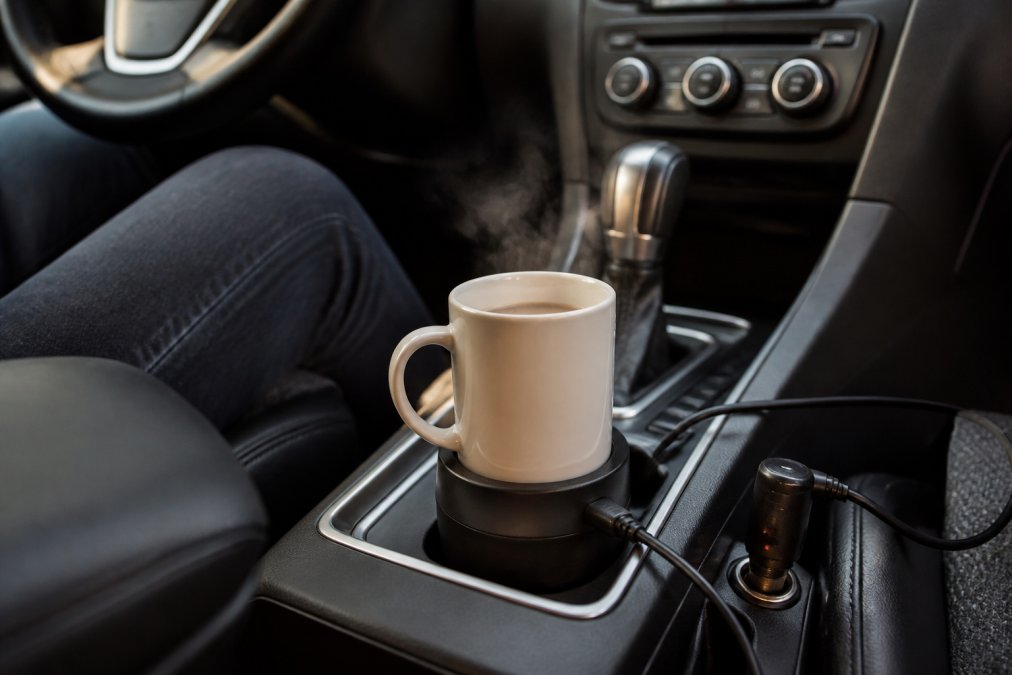
Car cup warmers are small electric devices that sit in your vehicle's cup holder and use a heating element to transfer warmth to your mug, keeping drinks at a drinkable temperature during your commute. The concept is simple: plug into your car's 12V outlet, place your mug on the heating plate, and let physics do the rest.

But here's what the marketing photos don't show you. Most car cup warmers deliver lukewarm results at best, and the reason comes down to one word: conductivity.
The heating element and thermal conductivity problem
A car cup warmer's heating element generates warmth through electrical resistance, but that heat has to travel through multiple barriers before it reaches your coffee. It passes from the heating plate, through the bottom of your mug, and into the liquid inside. Each transition loses energy.
That's why thermal conductivity matters more than wattage in most real-world scenarios.
Maintenance Heat vs. Active Heating: What the Specs Really Mean
Most car cup warmers provide maintenance heat, not active heating. That distinction changes everything about what you should expect.
Portable Electric Mug Warmer for Car: What to Look For
When shopping for a portable electric mug warmer for car use, the spec sheet matters less than how the device behaves inside your specific vehicle's electrical system. Prioritize a stable base that won't slide during turns, a cord long enough to reach your outlet without tension, and a flat heating surface that makes full contact with your mug's bottom. Then check the numbers below, because they decide whether the warmer works at all.
Voltage, power draw, and your car's electrical load
A standard 12V accessory outlet (the socket formerly used for cigarette lighters) is typically fused at 10 to 15 amps in most passenger vehicles, though some are rated as low as 10A and a few trucks and SUVs go higher. At 12 volts, a 10A circuit caps total draw at roughly 120 watts, and a 15A circuit at roughly 180 watts, shared across every device plugged into that circuit, not per device.
Fuse, battery, and ignition behavior
- Fuse rating: Check your owner's manual for the outlet's amperage before buying a high-draw warmer. If the manual lists 10A, treat 120W as your hard ceiling for everything on that circuit combined.
- Always-on vs. ignition-switched outlets: Some outlets stay live with the key off; others cut power when the ignition does. An always-on outlet plus a warmer left plugged in is the classic path to a dead battery. An ignition-switched outlet is safer by default.
- Battery drain: A 24W warmer left running on a live outlet draws about 2 amps continuously. Over several hours parked, that is enough to matter on an older or smaller battery. Never leave a warmer plugged into an always-on outlet when you exit the vehicle.
- Older wiring: Worn or corroded outlet contacts increase resistance, which generates heat at the plug itself. If the adapter feels hot to the touch at the socket, stop using it.
What actually separates a good car warmer from a bad one
| Feature | Why it matters in a vehicle |
|---|---|
| Draw under ~30W | Stays well inside a 10A circuit's budget alongside other accessories |
| Ignition-switched compatibility | Cuts power automatically when the car is off |
| Non-slip base or cup-holder grip | Prevents contact loss during turns and braking |
| Thermal cutoff / auto-shutoff | Reduces overheating risk in a confined interior |
| Flat, wide heating plate | Maximizes contact area with the mug bottom |
Real-world vibration and contact loss
A warmer that doesn't grip the cup holder can shift during turns, breaking contact between the mug and the heating plate. Conduction requires direct contact, so every bump and lane change that lifts the mug even slightly interrupts heat transfer. Your coffee cools while the device runs uselessly and keeps drawing power. A warmer with a raised lip, silicone grip, or snug cup-holder fit holds contact far better than a flat disc that slides freely.
How to Keep Coffee Hot in the Car: Practical Methods That Work
The most reliable way to keep coffee hot in the car is to start with a preheated mug and pair it with passive insulation rather than relying on a warmer alone. Preheating your mug with hot water for two minutes before pouring raises the starting temperature and buys you extra time.
Other methods that work:
2-in-1 Smart Car Cup Warmer/Cooler →
- Use a vacuum-insulated bottle for long commutes
- Choose a ceramic mug over stainless steel if you're using a warmer
- Keep the lid on between sips to reduce heat loss
- Park in the sun when possible to reduce ambient temperature loss
Mug Material Matters: Ceramic vs. Stainless Steel Heat Transfer
Most articles tell you ceramic works better with a warmer and stop there. The reason is worth understanding, because it determines whether your warmer does anything at all.
Why the mug's own engineering fights the warmer
| Mug type | Conducts plate heat? | Holds heat alone? | Best paired with |
|---|---|---|---|
| Thin ceramic | Yes, fast | No, loses heat quickly | A warmer |
| Double-wall ceramic | Partially, air gap slows transfer | Moderately | A warmer, with longer warm-up |
| Single-wall stainless | Yes, moderate | Poorly | A warmer or insulation sleeve |
| Vacuum-insulated stainless | Barely, vacuum blocks it | Yes, very well | Nothing; skip the warmer |
A common pattern is that people buy a premium vacuum-insulated travel mug and a cup warmer at the same time, then conclude the warmer is broken. It isn't, the two products are designed to defeat each other. If your mug keeps coffee hot for four hours on its own, a warmer adds almost nothing. If your mug goes cold in 20 minutes, a warmer is doing real work.
The preheat trick that changes the math
Because ceramic loses heat quickly on its own, preheating matters more with ceramic than with steel. Fill the mug with hot tap water for two minutes, dump it, then pour your coffee. You raise the mug body's starting temperature so the warmer isn't spending its limited output heating cold ceramic before it can reach the liquid. Most practitioners find this single step adds more usable sipping time than upgrading to a higher-wattage warmer.
Matching mug to method
- Short commute, ceramic mug: A maintenance warmer plus a preheat is the strongest combination.
- Long highway drive, vacuum tumbler: Skip the warmer. The tumbler alone outperforms anything a 12V outlet can add.
- Mixed use: Keep a thin ceramic mug in the car for warmer days and a vacuum tumbler for cold ones. Match the vessel to the trip, not the other way around.
Safety Features, Auto-Shutoff, and Vehicle-Specific Risks
Look for an auto-shutoff feature and safety certification on any warmer you buy. Devices without thermal cutoffs can overheat if left running, and in a confined car interior that's a genuine fire risk.
Verdict: Are Car Cup Warmers Worth It in 2026?
For short commutes with a preheated ceramic mug, yes, a car cup warmer can hold your drink at a comfortable sipping temperature. For long drives or cold drinks you want reheated, they fall short of the promise.
Frequently Asked Questions
Do car cup warmers actually keep drinks hot or just maintain temperature?
Most car cup warmers are designed for maintenance heat, not full reheating. They hold a drink at roughly 120-140°F once it's already hot, but they won't bring cold coffee up to a comfortable sipping temperature quickly. If you pour hot coffee before you leave and place it on the warmer immediately, it can stay drinkable for a 30-45 minute commute. Starting with a cold drink and expecting the warmer to fix it will lead to disappointment.
Can a portable electric mug warmer for car use drain my battery?
A typical 12V car cup warmer draws between 15 and 40 watts, which is low compared to a phone charger or dashcam. That said, leaving one plugged into an always-on outlet after the engine is off can slowly drain the battery over several hours. Use an outlet that cuts power when the ignition is off, or unplug the warmer when you park. This is one of the most common oversights among new buyers.
What's the best way to keep coffee hot in the car without a warmer?
Preheat your mug with boiling water for two minutes, then pour your coffee. A double-walled stainless steel vacuum cup like the Smart Digital Thermal Bottle holds heat for 6-12 hours on its own. Ceramic mugs lose heat faster than stainless steel because ceramic has lower heat retention, so the mug you choose matters as much as the warmer.
Are car cup warmers safe to leave plugged in while driving?
Yes, provided the unit has auto-shutoff and a fuse-protected 12V plug. Look for safety certification on the packaging and avoid daisy-chaining multiple 12V devices into one socket. Vibration from driving can shift a mug off the heating plate, so choose a warmer with a raised rim or non-slip surface. The 2-in-1 Smart Car Cup Warmer/Cooler has a digital temperature display, which lets you monitor surface temperature in real time.
Most car cup warmers can't fix a cold drink, but the right setup keeps your coffee drinkable for the whole commute. Jackie's Attic carries the 2-in-1 Smart Car Cup Warmer/Cooler with intelligent temperature control, heating and cooling modes, and a digital display, plus insulated bottles built for the road. Get started with Jackie's Attic and keep every sip at the temperature you actually want.


