


Table of Contents
- Start With Scale, Proportion, and Sightlines
- Pick a Color Palette and Layer Textures
- How to Style Home Accessories in Odd-Number Groupings
- Minimalist Home Accessories That Still Feel Personal
- Functional Home Decor: Balancing Luxury and Everyday Use
- Sustainable Sourcing and Caring for Modern Materials
- Frequently Asked Questions
Last Updated: September 10, 2026
Start With Scale, Proportion, and Sightlines
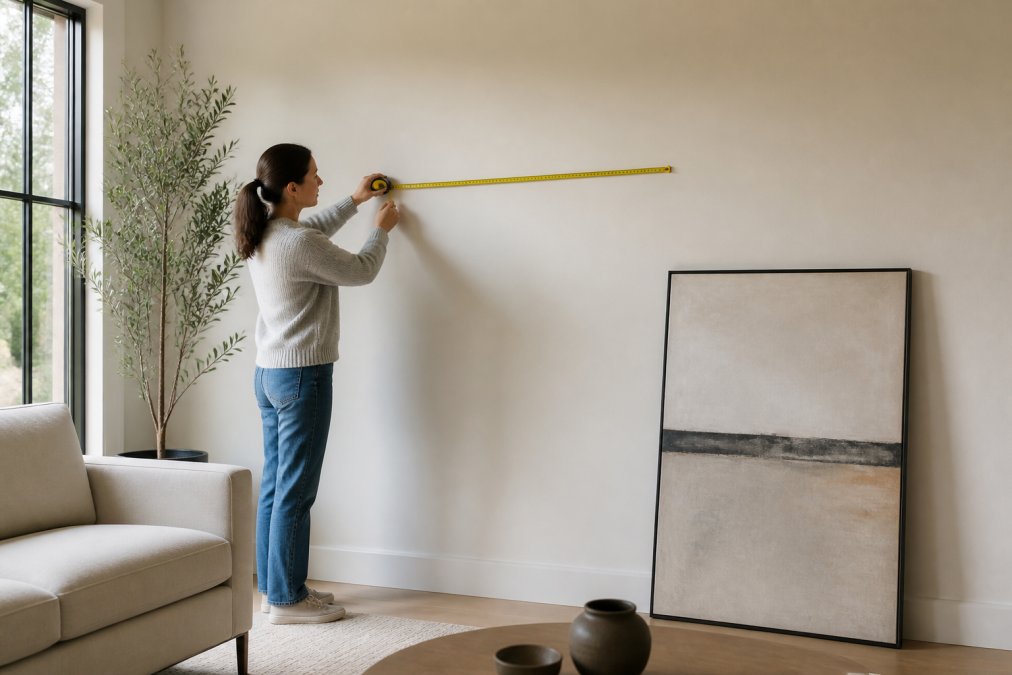
The fastest way to make a room feel wrong is to buy modern home accessories that ignore the room's actual dimensions. Scale and proportion are the two measurements most shoppers never check, and they explain why a vase that looked perfect in the store can look undersized on your console. Before you buy anything, measure three things: your wall length, your ceiling height, and the depth of the surface you're styling. A large canvas print, like the 24"x48" black and white abstract piece from Jackie's Attic, works because its format is chosen to fill a wall without crowding it.

Sightlines matter just as much. Walk into the room from the doorway and note what your eye hits first. That's your focal point, and every accessory should either support it or stay out of its way. The home decor market hit an estimated $139 billion in 2026, according to Printful's home decor market analysis, which means more options than ever compete for the same wall space. Narrowing by scale first is how you cut that list down fast.
Pick a Color Palette and Layer Textures
A cohesive palette is what separates a curated collection from a pile of nice objects. Choose two or three colors that already exist in the room, then repeat them across accessories at different scales. Neutral tones give you the most flexibility, but that doesn't mean a room has to be beige. A single saturated accent used three times reads as intentional; used once, it reads as an accident.
Texture does the work color can't. Material contrast, like pairing a matte ceramic with brushed metal or woven textile, adds depth that flat color alone won't deliver. According to Frontiers in Computer Science research on decor and screen-based media, decor choices are increasingly shaped by what people see on screens, which is exactly why physical texture matters more, not less. Screens flatten everything.
- Start with your existing wall color and pull one darker and one lighter tone from it
- Choose one accent color and repeat it in at least three places
- Mix at least two textures per surface: smooth, matte, woven, or metallic
- Keep metallics to one finish per room unless you're deliberately mixing
How to Style Home Accessories in Odd-Number Groupings
Odd-number grouping is the single most reliable styling rule in interior design, and it works because the eye finds asymmetry more interesting than pairs. Three objects of varying heights and widths create a triangle the eye can travel, while two objects just sit there. This is the core of vignette creation: a small, self-contained scene on a table, shelf, or tray.
The Baymard Institute's e-commerce UX research on furniture and decor sites found that shoppers make better decisions when product pages show items in context rather than isolated on white. That's the same principle at work on your coffee table. Group items so they tell a small story.
Build a vignette in four steps:
- Place your tallest piece at the back, off-center
- Add a medium piece to one side, overlapping slightly
- Add a small sculptural or functional object in front
- Layer a flat element, like a book or tray, underneath to anchor the group
Minimalist Home Accessories That Still Feel Personal
Minimalist home accessories work when they're edited, not emptied. The 2026 trend data points to fewer items, natural materials, and soft colors, according to The Rustic Brush's 2026 modern decor trends, but strict minimalism has a real failure mode: rooms that look like showrooms nobody lives in.
The fix is choosing fewer pieces that carry more meaning. One object from a trip beats five generic vase fillers. Design-conscious shoppers increasingly favor flowing, organic forms over sharp, boxy furniture, per Woodgrain's 2026 interior trends report, and organic shapes tend to read as warmer even in a sparse room.
Functional Home Decor: Balancing Luxury and Everyday Use
Functional home decor earns its place by doing a job, and in 2026 that's the direction buyers are moving. Inflation and housing constraints are pushing shoppers to weigh every purchase more carefully, according to Mintel's US home shopping market report, so an accessory that's beautiful but useless has a harder time justifying its price. The modern twist is that "functional" now includes technology: smart speakers, hubs, eero-style mesh nodes, and charging cables are permanent residents of most rooms, and the styling problem is no longer whether to hide them but how to make them look intentional.
Styling around smart home tech. The mistake is treating a smart speaker like a piece of furniture to conceal. A better approach is to give it a designed home:
- Give the device a tray or plinth. A small stone or wood tray under a speaker turns it from a gadget into a deliberate object, and it corrals the cable.
- Match the finish, not the brand. Matte-white speakers disappear against light walls; charcoal or fabric-wrapped speakers read as sculptural against a neutral shelf. Pick the finish that matches your palette, not the one that matches your phone.
- Route cables before you style. A single visible cable undoes an otherwise clean vignette. Use adhesive cable clips along the back edge of a shelf, or a cable-management box behind a console, so the only thing the eye reads is the object.
- Group tech with non-tech. A speaker, a candle, and a small ceramic bowl on one tray reads as decor; a speaker alone reads as electronics.
- Respect the microphone. Don't bury a voice assistant behind books or fabric, it muffles the mic and the speaker. Leave a few inches of clearance on all sides.
Charging as decor. Wireless charging pads and multi-device stations are the most common functional accessory in a modern home, and they're also the most likely to look like clutter. The fix is to choose a charging solution that matches your material palette, a leather-wrapped pad, a wood-topped station, or a fabric-covered one, and to place it where you already set your phone down (nightstand, entry console, kitchen counter), not in a dedicated "tech corner" nobody uses. A foldable 3-in-1 station that charges phone, watch, and earbuds at once clears the counter of three separate cables, which is a real visual win, not just a convenience one.
A quick decision framework. Before buying a functional piece, run it through four questions:
| Priority | What to Look For | Example |
|---|---|---|
| Space-saving | Foldable or wall-mounted design | Foldable charging station |
| Dual purpose | Serves two functions daily | Night light plus sculpture |
| Display plus storage | Holds items, looks intentional | Chain wine rack |
| Longevity | Materials that resist wear | UV-resistant canvas print |
- Does it replace something I already own? If it replaces a cable, a lamp, or a storage bin, it's earning its footprint.
- Will I use it daily? Weekly-use items are decoration with extra steps.
- Does it match my palette? A functional piece that clashes is still a clash.
- Can I clean it easily? Tech-adjacent surfaces collect dust and fingerprints; if it's hard to wipe down, it will look tired in a month.
Sustainable Sourcing and Caring for Modern Materials
Sustainable sourcing comes down to three questions: what it's made from, how far it shipped, and whether it will last. Longevity is the most underrated of the three. A piece that survives ten years uses far fewer resources than three replacements, so the most sustainable accessory is usually the one you don't have to rebuy. When comparing two similar pieces, favor solid wood over veneer-over-particleboard, FSC-certified lumber where it's labeled, recycled or reclaimed metal, and natural fibers like wool, linen, and jute over synthetic blends that pill and shed. Shipping distance matters less than durability, but it still counts: a domestically made ceramic vase that lasts a decade beats an imported one that chips in a year.
Maintenance is where most modern home accessories quietly fail, and it's the part almost no buying guide covers. Modern finishes each have a specific failure mode:
- Matte metal and powder-coated steel, the matte surface is a microscopic texture that traps oils from hands. Wipe with a dry microfiber cloth weekly; if you must use water, dry immediately, because standing moisture etches the finish and leaves water spots that won't buff out.
- Polished chrome and stainless steel, fingerprint-prone and easy to scratch. Use a dedicated stainless polish and always wipe with the grain, never in circles, or you'll leave swirl marks.
- Unlacquered brass and copper, these are meant to patina. If you want the aged look, leave them alone; if you want them bright, use a lemon-and-salt paste or a commercial brass cleaner, then rinse and dry fully. Never use abrasive pads, which strip the protective oxide layer unevenly.
- Acrylic and polycarbonate, static attracts dust, so dust with a dry microfiber cloth rather than a paper towel, which micro-scratches. Clean with a 50/50 mix of water and isopropyl alcohol; never use ammonia-based glass cleaner, which clouds acrylic over time.
- High-gloss lacquer and lacquered wood, the finish is a thin film that hates heat and alcohol. Use coasters under drinks and felt pads under objects; wipe with a barely damp cloth and dry immediately. A heat ring from a mug is permanent.
- Canvas and framed art, dust every two to three weeks with a dry, soft cloth or a soft brush, and keep out of direct sun to protect color stability. Never spray cleaner directly on canvas; it wicks into the weave.
- Ceramics and glass, the easiest category: warm water, mild dish soap, no abrasive pads. Hand-wash anything with a hand-painted or metallic glaze, since dishwashers dull both.
- Textiles (throws, pillows, rugs), rotate and flip seasonally so wear and sun fading are distributed, and vacuum low-pile rugs with a suction-only head to avoid pulling fibers.
A few habits extend the life of everything on this list:
- Keep the original packaging for anything fragile or oversized for the first 30 days, it makes returns painless and protects the piece if you move it later.
- Rotate accessories seasonally, which both refreshes the room and spreads wear.
- Clean from the top of a shelf down, so dust doesn't land on pieces you've already wiped.
- Test any new cleaner on an inconspicuous spot first, especially on lacquer and acrylic.
Frequently Asked Questions
What are some good accessories for a modern home?
Good modern home accessories balance form and function. Look for sculptural vases, abstract wall art, textured throw pillows, and accent lighting with clean lines. Functional pieces like a 3D illusion night light or a suspension chain wine rack add visual interest while serving a purpose. Choose items that share a cohesive color palette and vary in height and material to create depth without clutter.
What are the 2026 home decor trends?
In 2026, modern interior design favors fluid, welcoming aesthetics with flowing lines over sharp, boxy furniture. Minimalist and natural materials remain popular, with soft color palettes and fewer, more intentional decor items.
How do you balance functionality and aesthetics in functional home decor?
Start by choosing pieces that solve a problem while looking intentional. A foldable wireless charging station keeps surfaces clear and looks sleek. Prioritize items with clean lines and neutral tones so they blend into your existing design, then group them with decorative accents to create a cohesive vignette.
How many decorative accessories should be in a room?
There is no fixed number, but the 'less is more' approach works well for modern spaces. Aim for three to five accessories per surface, grouped in odd numbers. Focus on quality over quantity: one large statement piece like a 24x48 abstract canvas can anchor a wall, while two or three smaller items on a shelf add balance without visual clutter.
What is the 70/30 rule in decorating?
The 70/30 rule suggests that 70% of your decor should follow a consistent style or color palette, while 30% can introduce contrasting elements. This creates visual balance and keeps a room from feeling monotonous. For example, use neutral tones for most of your modern home accessories, then add a bold abstract print or a metallic wine rack as a statement piece.
How do I choose modern home accessories on a budget?
Focus on versatile, multi-functional pieces that earn their space. A suspension chain wine rack at $8.37 or a ribbon wine rack at $7.74 adds sculptural interest without a big spend. Shop your own home first, rearranging existing items into new vignettes. When buying new, prioritize one or two quality pieces over several cheap ones that may not last.


