


Table of Contents
- Are Smart Car Accessories Worth It? How to Decide Before You Buy
- Smart Car Gadgets and Accessories That Solve Real Problems
- Car Accessories Worth Buying: A Value-for-Money Breakdown
- Smart Car Accessory Compatibility: Model, Year, and Port Checks
- Safety, Legality, and Warranty: What to Know Before You Install
- Durability and Long-Term Cost: Which Smart Car Accessories Last
- Which Smart Car Accessories Fit Your Needs?
- Conclusion
- Frequently Asked Questions
Last Updated: October 15, 2026
Are Smart Car Accessories Worth It? How to Decide Before You Buy
Are smart car accessories worth it? For most commuters, yes, but only when they solve a problem you actually have every day. This guide from Jackie's Attic breaks down which upgrades earn their place and which ones just drain your wallet.

The honest answer depends on three things: how often you drive, what annoys you behind the wheel, and whether the accessory fits your specific model. A cup warmer that keeps coffee hot on a 40-minute commute earns its keep. A novelty gadget that plugs into a port you never use does not.
Below, we explain exactly how to tell the difference before you spend a dollar.
Smart Car Gadgets and Accessories That Solve Real Problems
Start with the problems you notice on repeat: cold coffee, a dead phone, clutter rolling around the cabin. The accessories worth buying fix those specific frustrations.
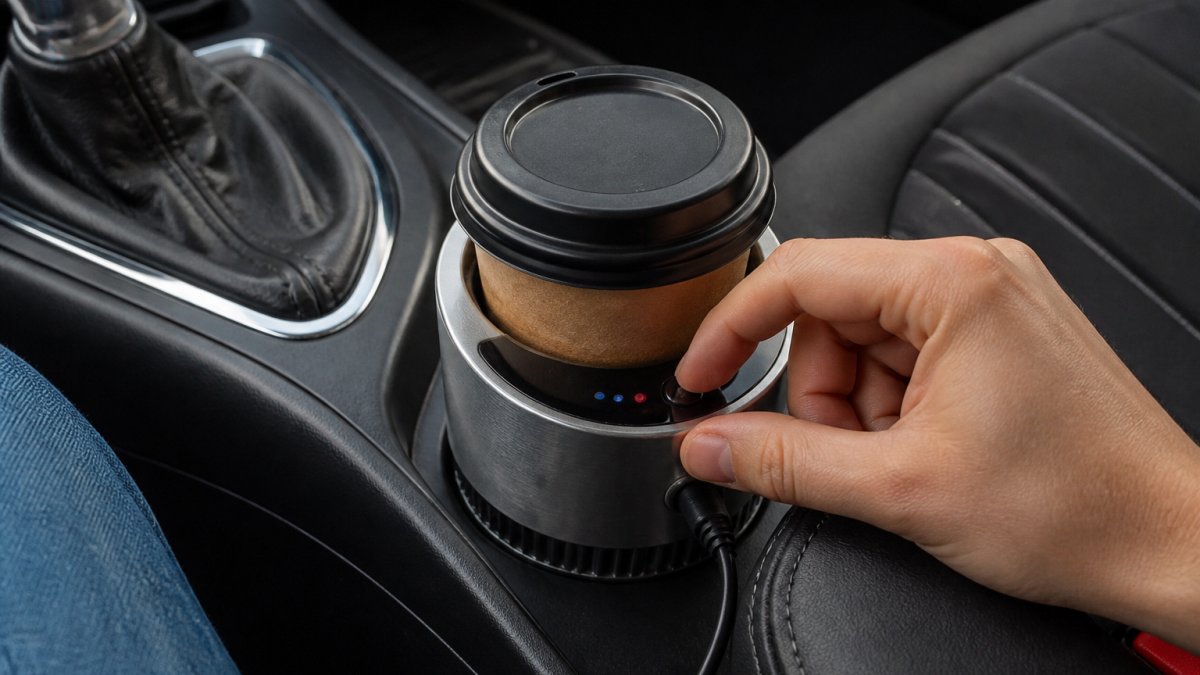
The 2-in-1 Smart Car Cup Warmer/Cooler is a good example. It switches between heating and cooling modes with intelligent temperature control, and the digital display shows real-time temperature readings so you know your drink is actually at the right level. For a long commute, that is a real difference, not a gimmick.
The Smart Digital Thermal Bottle takes a different approach: a 450ml stainless steel vacuum cup that holds temperature for hours without needing power. If you want zero setup and no cables, this is the simpler pick.

Most guides list gadgets without asking whether you'll use them. We'd rather you buy one thing that works than three that sit in a drawer.
Car Accessories Worth Buying: A Value-for-Money Breakdown
Value comes down to cost per use, not sticker price. An accessory you use twice a day for years costs pennies per trip; one you use once costs a lot. The trick is doing the math before you buy, not after the box is open.
Here is a framework to use. Estimate three numbers: purchase price, uses per week, and how many years you realistically expect the item to last. Then divide.
Cost per use = price ÷ (uses per week × 52 × years of life)
Run that on a few common categories and the ranking flips fast:
| Accessory type | Typical price band | Uses per week | Realistic life | Cost per use |
|---|---|---|---|---|
| Insulated stainless bottle | $20-$40 | 10 | 5+ years | Under $0.02 |
| Phone charging mount | $15-$45 | 10 | 2-3 years | $0.01-$0.04 |
| Cup holder organizer | $10-$25 | 7 | 3+ years | Under $0.03 |
| Powered cup warmer/cooler | $25-$60 | 5 | 1-2 years | $0.05-$0.23 |
| Ambient light kit | $20-$50 | 5 | 1-2 years | $0.04-$0.19 |
| Seat gap filler | $10-$20 | 7 | 2+ years | Under $0.03 |
Two patterns jump out. First, anything that lives in the car permanently and needs no power tends to win on cost per use, because it never gets left at home and never needs charging. Second, powered gadgets with batteries or digital displays carry a shorter expected life, which pushes their per-use cost up even when the sticker looks similar.
That does not make powered accessories bad. It means they have to solve a problem you hit often enough to justify the higher per-use number. A cup warmer used every weekday commute at $40 over two years lands around $0.08 per use, cheap enough to defend. The same warmer used twice a month lands near $0.83 per use, which is harder to justify.
Rank by use case, not by category:
- Commuting: charging mount first, then cup holder organizer, then a powered warmer if you drink coffee daily.
- Parking and tight spaces: backup camera display, blind-spot mirror, or a phone mount angled for a parking app.
- Comfort: seat cushion, lumbar support, sun shade, all low-cost, high-frequency, long-life.
- Storage and travel: trunk organizer, seat-back hooks, collapsible bins.
- Styling: ambient lighting, seat covers, steering wheel cover, lowest priority because they rarely change how the car functions.
If you only buy one thing this year, buy the accessory tied to your most frequent annoyance. Then wait a month. If you stopped noticing it, you have your answer about the next one.
Smart Car Accessory Compatibility: Model, Year, and Port Checks
Compatibility is where most returns happen. Cup holder diameters, port types, and 12V outlet placement vary widely between models and model years, even within the same brand.
Check three things before you order:
- Cup holder size - measure the diameter, since some accessories need a snug fit
- Power port type - confirm whether you have a 12V socket, USB-A, USB-C, or all three
- Physical clearance - make sure the accessory doesn't block a shifter, vent, or control
A cup warmer that fits one vehicle may wobble in another. Measure first, and read the listed dimensions rather than assuming "universal" means universal.
2-in-1 Smart Car Cup Warmer/Cooler →
Safety, Legality, and Warranty: What to Know Before You Install
Any accessory that blocks your view, interferes with controls, or distracts you while driving is a problem, regardless of how useful it seems. Mounts and organizers should never obstruct the windshield or airbags.
Warranty is the other consideration. Some automakers treat aftermarket electronics as a modification that can affect coverage on related systems, so it's worth reading your warranty terms before hardwiring anything. Plug-in accessories that use existing ports are the lower-risk choice.
For guidance on vehicle safety equipment and aftermarket parts, the National Highway Traffic Safety Administration publishes consumer information worth checking before you install anything permanent.
Durability and Long-Term Cost: Which Smart Car Accessories Last
Durability separates a one-season purchase from a five-year one. The accessories that last tend to share a few traits: they draw power within spec, they're built from materials that handle temperature swings, and they don't rely on a fragile clip or hinge.
Here is what actually kills each category, based on the patterns owners report most often:
- Powered cup warmers and coolers: the thermoelectric plate and the fan are the first to go. Heat cycling in a parked car accelerates wear.
- Charging mounts: the cable and the spring-loaded clamp fail before the electronics do. Wireless pads lose grip strength as the silicone ages.
- Insulated bottles: vacuum seals fail only if the inner wall is dented. A quality 316 stainless bottle with no dents can hold temperature for a decade.
- Fabric organizers: UV exposure through the rear window is the main enemy. Look for UV-resistant stitching and rigid bases rather than soft-sided bins.
- Adhesive-mounted anything: dash heat softens the adhesive. Suction cups fail in cold; tape fails in heat. A clip-on or vent-mount design usually outlasts both.
Total cost of ownership is more than the sticker. Add these:
- Purchase price, the number you see.
- Installation, most plug-in accessories are $0; hardwired ones may need a shop visit.
- Consumables, replacement cables, adhesive pads, fuses.
- Maintenance, cleaning, recharging, re-seating.
- Replacement interval, how often you buy the item again.
A $30 powered warmer replaced every 18 months costs about $20 per year. A $30 stainless bottle that lasts eight years costs under $4 per year. Same sticker, very different ownership cost.
One more durability factor most guides skip: your climate. A car parked in direct summer sun can hit interior temperatures well above 130°F, which shortens the life of any lithium battery, adhesive, or plastic housing. If you park outside, favor mechanical and insulated designs over battery-powered ones, or store the powered accessory in the glovebox when it's not in use.
The practical takeaway: buy the item with the longest realistic life for the job you need done, then treat the price as a yearly cost rather than a one-time hit. That reframing is what separates a smart purchase from an impulse one.
Which Smart Car Accessories Fit Your Needs?
Match the accessory to your driving pattern, not to a trend. The right pick changes based on how you use your car.
- Long daily commute with coffee: a cup warmer/cooler with temperature control pays off fast
- All-day travel and outdoor trips: an insulated smart bottle needs no power and holds temperature for hours
- Short city trips: prioritize storage and organization over powered gadgets
- Gift shopping: insulated drinkware suits almost any driver and rarely goes unused
If you're not sure, start with one accessory tied to your biggest daily annoyance. Add more only once that one proves useful.
For broader context on how consumers weigh these purchases, the Federal Trade Commission's consumer guidance on evaluating product claims is a useful reference.
Conclusion
The real challenge isn't finding smart car accessories; it's choosing the few that earn a permanent spot in your car instead of a drawer. At Jackie's Attic, you can find the 2-in-1 Smart Car Cup Warmer/Cooler with intelligent temperature control and a real-time digital display, plus the Smart Digital Thermal Bottle in 316 stainless steel for all-day insulation. Both are built for daily use, not novelty. Add one to your cart and fix the annoyance you notice every single commute.
Frequently Asked Questions
Are smart car accessories worth the money?
It depends on what you buy. A $52 cup warmer/cooler that keeps drinks at a set temperature for your whole commute can replace a daily coffee stop, paying for itself in a few weeks. Basic phone mounts or cheap chargers often break and add little value. Focus on accessories that solve a specific annoyance you face every day, and check compatibility before ordering.
Which smart car gadgets and accessories are most useful for everyday driving?
Temperature-control items like a cup warmer/cooler and an insulated smart bottle tend to get the most daily use. A 450ml stainless steel bottle with a digital temperature display keeps drinks hot or cold for 6 to 12 hours, which covers a full workday. Storage organizers and phone mounts also rank high because they reduce clutter and keep essentials within reach. Skip novelty gadgets you will only use once.
Are smart car accessories compatible with older vehicles?
Most 12-volt accessories, including cup warmers and coolers, work in any car with a standard power outlet or USB port. Smart bottles with temperature sensors are self-contained and do not need vehicle integration. The main compatibility issues are physical fit (cup holder diameter) and power draw. Check your cup holder size and your car's outlet amperage before buying.
How can I tell whether a car accessory is worth buying?
Ask three questions: Does it solve a problem you hit at least weekly? Does it fit your specific car model and year? Will it last more than a few months? Accessories with digital displays, stainless steel construction, or adjustable settings tend to hold up better than generic versions. A $9 smart bottle that keeps coffee hot for 6 hours is a better value than a $5 bottle that stops working in a month.


