


Table of Contents
- Why Magnetic Levitating Ornaments Are the New Statement Piece
- How Magnetic Levitation Works (Without the Physics Degree)
- Levitating Plant Pots for Home: Bring Your Greenery to New Heights
- Levitating Desk Accessories: From Floating Light Bulbs to Kinetic Sculptures
- How to Set Up Magnetic Levitation Decor: Step-by-Step
- Are Magnetic Levitating Ornaments Safe for Your Electronics?
- Where to Find Quality Magnetic Levitating Ornaments
- The Future of Floating Home Decor
- Frequently Asked Questions
Last Updated: September 6, 2026
Why Magnetic Levitating Ornaments Are the New Statement Piece
The global market for levitating gadgets is currently valued at $1.97 billion in 2026, according to Business Research Insights market analysis, and it shows no signs of slowing down. This surge reflects a growing appetite for magnetic levitating ornaments for home decor that blend science with visual wonder. This surge reflects a growing appetite for magnetic levitating ornaments for home decor that blend science with visual wonder.
What makes these objects so compelling is their inherent contradiction. A floating globe or a suspended plant pot feels impossible, yet there it sits, hovering in mid-air with zero visible support. That tension between expectation and reality is what turns a simple ornament into a conversation piece. Magnetic levitation is the art of creating stable, floating displays using electromagnetic fields and permanent magnets working in opposition to gravity.
The market projections support this momentum. Industry research from Dataintelo's levitating gadgets forecast indicates the sector could expand from $3.8 billion in 2025 to $9.2 billion by 2034, growing at a compound annual rate of 10.3%. These numbers tell us that levitating ornaments are not a passing fad but an emerging category of modern home accessories.
Below, we will walk through the technology, the best types of floating decor for different rooms, setup steps, and safety considerations. By the end, you will know exactly which levitating ornament fits your space and how to get the most from it.
How Magnetic Levitation Works (Without the Physics Degree)
Magnetic levitation is the process of suspending an object in mid-air using magnetic fields to counteract the force of gravity. In practical terms, most consumer levitating ornaments use a base unit containing an electromagnet and sensors that constantly adjust the magnetic field to keep the floating object stable.
The floating object itself typically contains permanent magnets. When the base is powered on, it generates an electromagnetic field that repels the magnets in the ornament. Sensors detect any drift or wobble and make micro-adjustments to keep the object centered and balanced. This is why most levitating ornaments require a power adapter and cannot work on battery power alone.
Research published in ResearchGate's study on magnetic levitation in wooden crafts demonstrates how this technology can be successfully integrated into fine artwork and wooden crafts to create innovative floating decorative objects. The study confirms that the aesthetic finish of professional-grade devices depends on precise stabilization, something DIY methods using simple staples rarely achieve.
Levitating Plant Pots for Home: Bring Your Greenery to New Heights
Levitating plant pots for home use are among the most popular entry points into this category because they combine biophilic design with futuristic flair. A floating planter suspends your plant a few centimeters above its base, allowing the roots and pot to rotate slowly in the air, which creates a living kinetic sculpture.
These planters work best with smaller, lightweight plants. Succulents, air plants, and small ferns are ideal candidates because they do not overwhelm the weight capacity of the magnetic field. Most levitating planters support between 1 and 3 kilograms, so you will need to account for the pot, soil, and water weight combined. Before purchasing, check the base unit's weight capacity and measure your plant's current pot to ensure compatibility.
The visual payoff is substantial. A floating bonsai or trailing pothos becomes the focal point of any room, drawing eyes immediately. For those with limited floor space, a levitating planter on a side table or shelf adds greenery without taking up additional surface area. This makes levitating plant pots for home decor a smart choice for apartment dwellers who want maximum impact from minimal footprint.
The one drawback is that watering requires removing the plant from its magnetic base. Plan for a routine where you lift the plant, water it, let it drain, and then return it to its floating position. It adds a step to plant care, but the result is worth the extra effort.
Levitating Desk Accessories: From Floating Light Bulbs to Kinetic Sculptures
No category better captures the "wow factor" of this technology than levitating desk accessories. Floating light bulbs that hover above a wooden base while glowing wirelessly are the standout product here, combining magnetic suspension with wireless power transfer to illuminate without any physical connection.
A floating light bulb makes an immediate statement on any workspace. The bulb hovers and rotates slowly above its base, casting warm light across your desk while appearing to defy physics. It doubles as task lighting and ambient accent, which is why these items dominate viral home office decor lists. According to Adnan Home Decor's 2026 viral gadget roundup, magnetic levitation is a key component of viral home decor gadgets for 2026, prized for its ability to deliver a futuristic yet cozy aesthetic in modern living spaces.
Beyond light bulbs, the category includes kinetic sculptures, floating globes, and levitating speakers. Kinetic sculptures use the same electromagnetic suspension to keep abstract metal shapes rotating indefinitely, creating a mesmerizing zero-friction motion that never needs winding. These pieces work exceptionally well on office desks, bookshelves, or entryway consoles where they catch the eye of anyone entering the room.
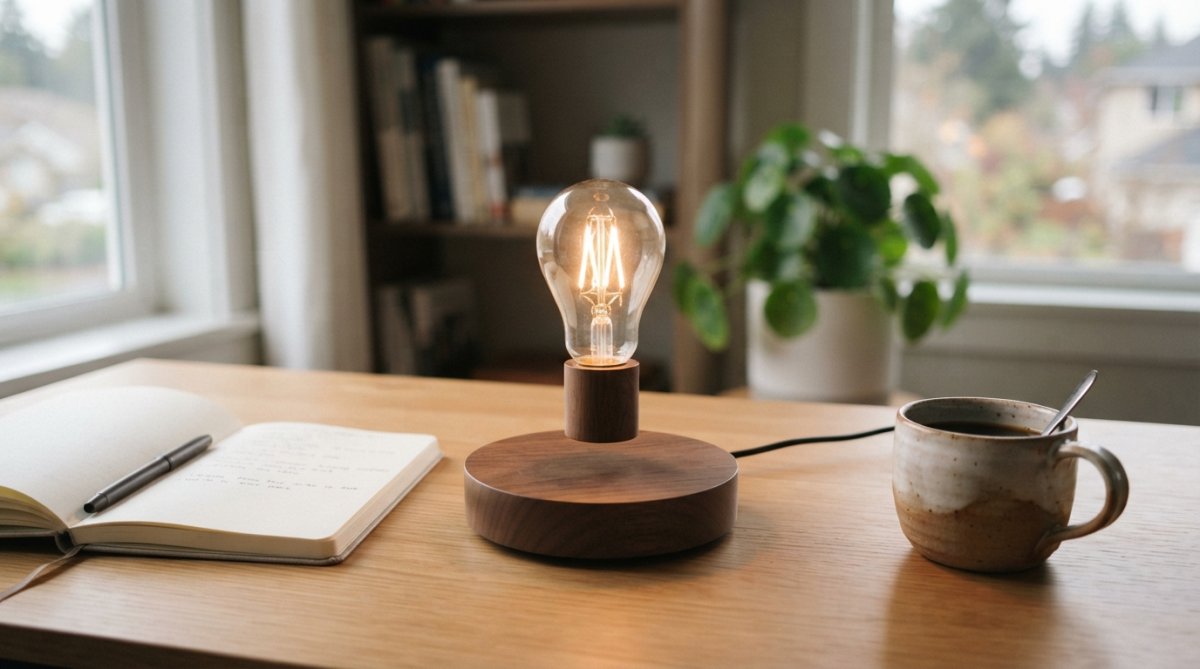
For the best results, place your levitating desk accessory on a stable, level surface away from vents and direct sunlight. Air currents can destabilize the magnetic field, causing the object to wobble or drop. A solid wood desk or stone counter provides the most reliable platform.
How to Set Up Magnetic Levitation Decor: Step-by-Step
Setting up magnetic levitation decor takes about five minutes, but the process requires patience and attention to detail. Most levitating ornaments follow the same basic setup procedure:
- Place the base unit on a flat, stable surface and plug in the power adapter.
- Wait for the base to initialize, usually indicated by a light or sound.
- Slowly lower the floating ornament toward the center of the base.
- Feel for the magnetic field pushing back, then release the ornament gently.
- Allow the sensors a few seconds to stabilize the object.
- If the ornament drops, reposition it and try again with a slower release.
The most common mistake is releasing the ornament too quickly or from an angle. The magnetic field is strongest directly above the center of the base, so approach from straight above and release with a steady hand. If your ornament keeps falling, check that the base is level and that no metal objects are nearby interfering with the field.
Stabilization takes a few seconds after release. You may notice the ornament wobble slightly before the sensors lock it into place. This is normal. Once stable, most levitating ornaments will rotate slowly and continuously, which is part of their charm. If the rotation stops or the object begins to drift, check for nearby electronics or metal that may be disrupting the electromagnetic field.
Are Magnetic Levitating Ornaments Safe for Your Electronics?
Magnetic levitating ornaments are generally safe for nearby electronics, but placement matters. The electromagnetic field generated by the base is localized and weak enough that standard household electronics, including smartphones and laptops, operate normally when placed a few feet away.
The bigger concern is direct contact with magnetic media. Credit cards with magnetic stripes, older hard drives, and pacemakers should never come into direct contact with the base unit or the floating ornament's magnets. Keep these items at least 6 inches away from the device to avoid any risk of data corruption or interference.
Power consumption is another consideration. Most levitating ornaments draw between 5 and 15 watts, comparable to a small LED lamp. Running one continuously for a year adds roughly $10 to $20 to your electricity bill, depending on your local rates. If you want to reduce energy use, simply switch off the base when the ornament is not being displayed. The floating object will drop gently onto the base, and you can lift it off and store it separately if desired.
Heat generation is minimal in quality units. The electromagnet in the base produces some warmth during operation, but reputable manufacturers design their bases with adequate ventilation. If your base becomes hot to the touch, that is a sign of a faulty unit, and you should stop using it immediately and contact the manufacturer.
Where to Find Quality Magnetic Levitating Ornaments
Quality varies significantly across the levitating ornament market, so knowing what to look for matters more than where you shop. The key components are the strength of the electromagnet, the sensitivity of the stabilization sensors, and the build quality of the floating ornament itself.
Brands like FLYTE have established themselves by combining magnetic levitation technology with wireless power to create high-design home products such as levitating light bulbs and planters. Their success demonstrates that this technology can anchor a brand identity centered on the "wow factor" and high-design home decor. Smaller artisans have also entered the space; for instance, Craftsmm's handmade levitating wooden ornaments applies magnetic levitation to handmade wooden crafts, creating niche high-end decorative items that command premium pricing.
When evaluating options, consider these criteria:
- Weight capacity relative to what you want to float
- Power adapter quality and cable length
- Build materials of both base and ornament
- Warranty and customer support reputation
- Noise level of the base unit during operation
Jackie's Attic offers a curated selection of innovative lifestyle gadgets and practical home accessories, including our magnetic levitating starry sky ornament.
The Future of Floating Home Decor
The trajectory for levitating home decor points toward deeper integration with everyday objects. Market forecasts from Business Research Insights growth projections project the levitating gadgets market could reach $6.93 billion by 2035, growing at a CAGR of 15%. That growth will likely come from expanding beyond novelty ornaments into functional furniture, lighting systems, and display solutions.
We are already seeing the early stages of this shift. Wireless power integration means floating objects can now illuminate, rotate, and charge simultaneously. Future iterations may include larger floating shelves, levitating display cases for collectibles, and even furniture pieces that use magnetic suspension for adjustable heights.
For consumers, this means the current generation of levitating ornaments is both a purchase and an investment in understanding where home decor is heading. The technology will only become more refined, more affordable, and more integrated into daily living spaces.
Choosing the right levitating ornament comes down to matching the piece to your space and understanding the technology's limitations. Whether you want a floating planter for your living room or a levitating light bulb for your home office, the key is buying from a source that stands behind product quality. Jackie's Attic offers a curated range of magnetic levitating decor pieces that blend modern technology with everyday utility. Explore our collection to find the floating centerpiece your space has been missing, and get started with Jackie's Attic today.
Frequently Asked Questions
How do magnetic levitating ornaments work?
Magnetic levitating ornaments use a base unit with an electromagnetic field that repels permanent magnets hidden inside the floating object. Sensors in the base detect the object's position and constantly adjust the magnetic field to keep it stable in mid-air. This is called electromagnetic suspension. Many modern ornaments also use wireless power transfer, which lets items like light bulbs float and illuminate at the same time without any physical connection.
Are magnetic levitating ornaments safe for electronics?
Yes, magnetic levitating ornaments are generally safe for nearby electronics. The magnetic field is contained and stable, and the voltage is low. However, you should keep them away from pacemakers, credit cards, and old-fashioned hard drives. The main concern is the power adapter and base unit, so always use the included adapter and avoid exposing the base to liquids. The levitating object itself has no wires, which makes it safe to handle.
How much weight can a typical magnetic levitating ornament support?
The weight capacity of a magnetic levitating ornament depends on the strength of the electromagnet in the base unit. Always check the product specifications before you buy to make sure it can handle what you want to display.
Do magnetic levitating ornaments require a power source?
Yes, the base unit of a magnetic levitating ornament requires a power source. The electromagnetic field that keeps the object floating needs continuous electricity. Most bases plug into a standard wall outlet with a power adapter. The floating object itself does not need a battery or cord. If the power goes out, the object will slowly settle onto the base, so there is no risk of it crashing to the floor.


