


Table of Contents
- Why Your Nightstand Desk Becomes a Catch-All
- The 15-Minute Declutter Nightstand Mission: Step-by-Step
- Small Desk Storage Ideas That Fit a Nightstand
- Bedside Table Cable Management for Chargers and Wires
- Best Gadgets for Small Apartment Living on a Nightstand
- Common Mistakes to Avoid When Decluttering
- Conclusion
- Frequently Asked Questions
Last Updated: September 4, 2026
A cluttered nightstand desk is often the last thing you see before sleep and the first thing you face each morning, which makes it a silent driver of daily stress. Organizing experts suggest that a focused declutter nightstand session needs only 15 minutes to reset the space entirely, a benchmark recommended by Home Storage Solutions 101 for clearing flat surfaces. At Jackie's Attic, we offer space-saving solutions for compact homes, and this guide shows you exactly how to clear the visual noise so your bedside surface supports rest instead of chaos. The process below is quick, repeatable, and tailored for tight quarters where every inch of surface area counts.
Why Your Nightstand Desk Becomes a Catch-All
The nightstand desk is the hardest-working piece of furniture in a small apartment because it serves two conflicting roles: a restful surface for sleep essentials and a functional workspace. This dual purpose turns it into a catch-all for glasses, loose change, half-empty water bottles, and chargers that never get unplugged. The problem is rarely a lack of discipline; it is a lack of dedicated zones for the items that genuinely belong there.
A common mistake is treating the surface as temporary storage rather than assigning each item a permanent home. Without boundaries, clutter accumulates until the visual noise overwhelms the tiny space. Many small-space dwellers resist a minimalist aesthetic because they need many items within arm's reach, but experts agree the fix is better containment, not just removal. As professional organizer Jones puts it:
"What do you actually use? If you don't use it, it doesn't belong in your nightstand." -- Jones, Professional Organizer (Good Housekeeping, 2026)
The 15-Minute Declutter Nightstand Mission: Step-by-Step
A declutter nightstand mission works best when time-boxed, and 10 minutes is the recommended timer setting for rapid sessions according to Good Housekeeping's expert organization guide. Set a timer, commit to the process, and resist the urge to pause for sentimental reflection. The entire reset takes less time than a single episode of your favorite show.
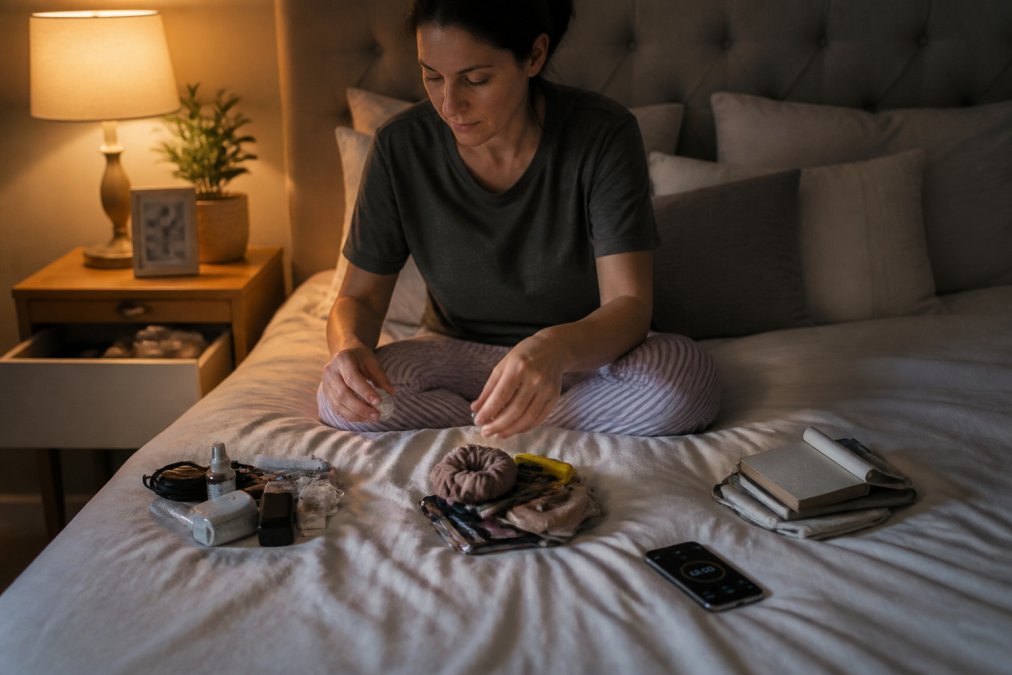
Step 1: Empty Everything Onto the Bed
Take every single item off the nightstand desk and place it on the bed. This includes items in the drawer, not just what sits on the surface. Seeing everything at once makes the sorting process honest, because hidden items can no longer hide from scrutiny.
Step 2: Sort Into Keep, Move, and Toss
Create three piles following the categorization method that Real Simple's decluttering rules popularized. The "Keep" pile holds items you use nightly or every morning. The "Move" pile contains things that belong elsewhere in your home. The "Toss" pile is for trash, expired products, and items you forgot existed.
Step 3: Wipe Down and Return Essentials Only
Clean the surface and drawer with a damp cloth, then return only the Keep pile. A useful trick is the "traveler's test": pretend you are packing for a trip and only replace items you would realistically pack for a hotel stay. This keeps your nightstand desk functional without turning it into a storage locker.
Small Desk Storage Ideas That Fit a Nightstand
Generic advice about drawer dividers only gets you so far when your nightstand desk is 18 inches wide and shares a room with a full-size bed. The competitive edge for tiny bedrooms is reclaiming vertical and under-furniture real estate that most guides ignore. Here are the specific hardware strategies that actually work in a compact footprint.
Wall-Mounted Shelves: The 12-Inch Rule
If your nightstand desk surface is crowded, move the items you use less than daily to a wall-mounted shelf installed directly above the desk. The key specification is depth: choose a shelf no deeper than 12 inches so it does not visually loom over the workspace or interfere with a reading lamp's reach. A floating shelf rated for at least 15 pounds handles a stack of three hardcover books, an alarm clock, and a small plant without sagging. Install it 14 to 16 inches above the desk surface so you can still reach items while sitting up in bed, but you cannot accidentally knock them off while sleeping.
Clip-On Trays and Bed Rails
For beds with a frame rail, a clip-on bedside tray adds a temporary landing zone without permanent installation. These trays clamp onto the bed frame and hold a phone, glasses, or a glass of water, freeing the desk surface entirely for work tasks. The trade-off is stability: clip-on trays work best on solid wood or metal frames, not on platform beds with no exposed rail. If your bed lacks a rail, a C-clamp shelf attached to the side of the nightstand desk itself provides the same function without taking up surface area.
Under-Bed Storage: The Hidden Catch-All
The space under your bed is the most underused square footage in a small bedroom. A low-profile under-bed storage bin (no taller than 6 inches) slides beneath the frame and holds items that migrate to the nightstand desk during the day: tablets, laptops, notebooks, and extra chargers. This is a 'Move' pile destination that is actually convenient, so items stay off the desk instead of returning within days. Choose a bin with wheels or a fabric handle so you can pull it out without crawling on the floor.
The Corner Shelf Hack
If your nightstand desk sits in a corner, a small corner shelf (typically 8 to 10 inches per side) mounts at the junction of two walls and creates a dedicated spot for a lamp or a diffuser. This removes one large object from the desk surface without requiring any additional floor space. The installation is straightforward with two wall anchors rated for at least 10 pounds each.
These hardware solutions do not require a specific brand or product line. They work with standard mounting hardware available at any home improvement store, and they all share one principle: move items off the desk surface and onto surfaces that were previously unused. The result is a nightstand desk that keeps only the three or fewer daily-use items within arm's reach, while everything else has a dedicated home that does not compete for your limited horizontal space.
Bedside Table Cable Management for Chargers and Wires
Cables are the most common source of nightstand visual noise, yet bedside table cable management rarely gets the attention it deserves. A charging station with a dedicated dock keeps cords organized and off the surface entirely. Clip cables to the back edge of the nightstand so they drop straight down instead of coiling across the tabletop.
The right approach depends on how many devices you charge overnight. A single cable can tuck behind the lamp base, but multiple devices need a structured solution. Foldable charging stations collapse flat during the day, which suits tiny apartments where counter space is scarce. Cord management is not about hiding every wire; it is about giving each one a path that does not cross your field of vision.
Best Gadgets for Small Apartment Living on a Nightstand
The best gadgets for small apartment living solve a problem without adding clutter, and the nightstand is where this distinction matters most. But the top-ranking guides stop at physical clutter. None of them address the 'digital nightstand', the notification pings, the glowing screen, and the charging cables that keep your brain half-awake even after you put the phone down. A truly decluttered nightstand desk manages both the physical and the digital layer.
The Physical Layer: Consolidation Over Addition
A 3-in-1 foldable wireless charger for only $27.30 replaces three separate cables and wall adapters, freeing up outlet space while keeping your phone, watch, and earbuds powered overnight. This is the single highest-impact swap for most bedside setups. The key specification to check is output wattage: a 30W charger powers a phone and a tablet simultaneously, while a 15W charger handles only a phone. If you charge a laptop overnight, you need a separate 65W USB-C cable, no foldable charger on the market handles that load in a compact form.

The Digital Layer: Notification and Light Management
Physical decluttering is incomplete if your nightstand desk still glows and buzzes all night. The digital decluttering process has three concrete steps that pair with the physical reset:
- Enable Do Not Disturb or Sleep Focus mode on your phone and tablet at least 30 minutes before bedtime. This stops notification pings that trigger the 'checking reflex' and pull your attention back to the screen.
- Set the display to grayscale in the evening. This removes the color cues that make notifications visually stimulating, reducing the urge to pick up the device. Both major mobile operating systems include this as a built-in accessibility feature, no third-party app required.
- Move the charging station out of direct line of sight. If you can see the screen glow from your pillow, your brain registers the light even with your eyes closed. Position the charger so the screen faces away from the bed, or drape a small cloth over the device after you set the alarm.
Blue Light Exposure: The Trade-Off
Blue light from screens suppresses melatonin production, which delays sleep onset. The practical fix is not to ban screens from the bedroom, that is unrealistic for most people, but to shift the timing. Use the nightstand desk for work or scrolling no later than 60 minutes before bed, then switch to a non-screen activity like reading a physical book or journaling. If you must use a screen in bed, enable the built-in night shift or warm light mode, which reduces blue light emission by shifting the display toward the warmer end of the spectrum.
The Gadget Selection Framework
When choosing any gadget for a small nightstand desk, apply a three-question test:
- Does it replace something else? If it adds a new function without removing an existing cable, brick, or device, it is clutter.
- Does it fold, stack, or mount? Gadgets that take up permanent horizontal surface area fail in small spaces. Look for foldable, wall-mountable, or vertically stacking designs.
- Does it have a single clear job? Multi-function gadgets earn their footprint only if all functions are ones you actually use weekly. A device with five features you use once a month is worse than a simple tool you use daily.
This dual-layer approach, physical consolidation plus digital management, is the angle that separates a genuinely restful nightstand desk from one that merely looks tidy. The gadgets you choose should serve both layers, not just the visible one.
Common Mistakes to Avoid When Decluttering
The most frequent error is trying to organize before decluttering, which merely rearranges the mess into neater piles. Always purge first, then categorize, then contain. Another common mistake is skipping the maintenance habit: a declutter nightstand mission means nothing if the surface re-clutters within a week.
Daily habits matter more than any single deep clean. Spend two minutes each morning returning items to their zones, and keep a small tray for the inevitable catch-all items so they stay contained. The "Declutter 365" calendar approach from Home Storage Solutions 101 suggests limiting the number of items kept on flat surfaces to prevent re-cluttering altogether. Consistency beats intensity when it comes to tidying up.
Conclusion
A clear nightstand desk is the foundation of a calmer morning and a more restful night, and the 15-minute reset is a habit worth building. The challenge is sustaining the result when life gets busy and devices multiply. Jackie's Attic helps you stay ahead of the clutter with space-saving charging solutions and practical organizers that blend modern technology with everyday utility. Add a foldable wireless charger to your setup and give every device on your nightstand a permanent, cable-free home.
Frequently Asked Questions
What is the 5-5-5 rule for decluttering?
The 5-5-5 rule asks you to identify 5 items to throw away, 5 to donate, and 5 to put back in their proper place. It is a quick framework for making progress without feeling overwhelmed. On a small nightstand desk, this might mean tossing old receipts, donating a book you have read, and returning a coffee mug to the kitchen. The rule works well for a 15-minute declutter session.
How do I keep my nightstand from becoming a catch-all?
The catch-all habit forms when items lack a designated home. Start by limiting surface items to three essentials: a lamp, a glass of water, and your phone charger. Use drawer dividers to create zones for items like glasses, lip balm, and notebooks. Schedule a two-minute reset each morning to return anything that migrated to the nightstand overnight.
What essential items should stay on a small bedside desk?
Keep only what supports your evening routine and morning wake-up: an alarm clock or phone, a glass of water, reading glasses, and perhaps a book. Items like lotion, tissues, and medications belong in the drawer, not on the surface. If you use the desk for work, keep a pen and notepad in a tray. Everything else should be stored elsewhere.
What is the best way to organize a small desk?
The best method is zoning: divide the surface into areas for work, supplies, and personal items. Clear the zone directly in front of you. Use vertical space with a small shelf or wall-mounted organizer for items that would otherwise pile up. Drawer dividers keep supplies contained and visible, so you do not buy duplicates of things you already own.
Get started with Jackie's Attic and turn your nightstand desk into a surface that supports your routine instead of overwhelming it.
This article was written using GrandRanker


